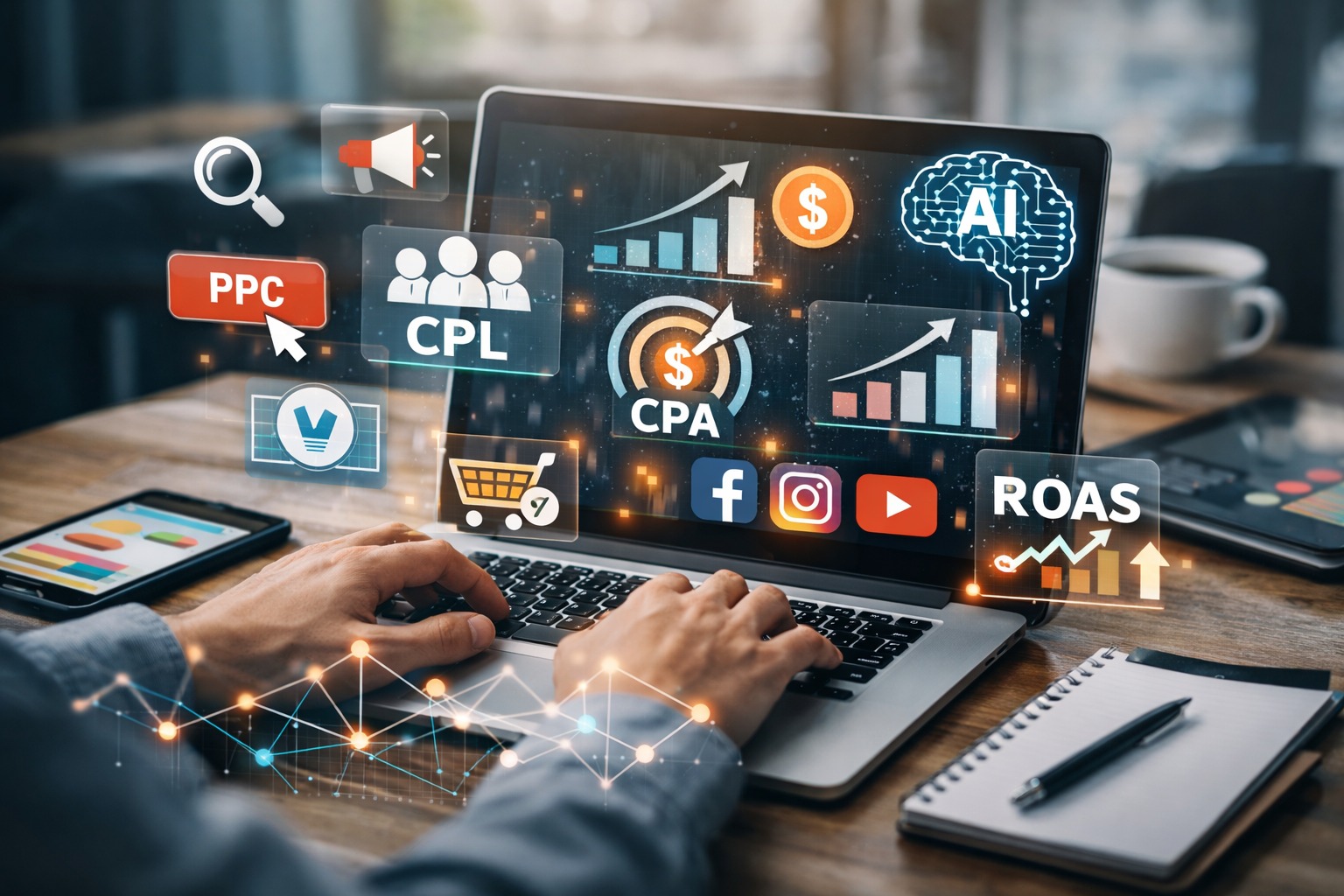
Performance Marketing in 2026: A Complete Beginner to Advanced Guide
Performance marketing is a results-oriented digital marketing approach in which advertisers or businesses pay marketing partners—such as publishers or affiliates—only when a predetermined action, like a click, lead, or sale, is completed. The action may include a click, lead, or sale.
A growing number of businesses are embracing performance marketing because it enables them to allocate advertising budgets more efficiently and achieve greater returns on investment (ROI). This marketing strategy's popularity is due to the increase in data, which makes it easier for businesses to track ad performance.
What is Performance Marketing in Simple Terms?
Performance marketing is a digital strategy where advertisers pay only when a specific action—like a click, lead, or sale—is completed.
How Performance Marketing Works
The way performance marketing works is as follows:
Advertisers: These are the entities that want to advertise their products or services.
Platforms: These include search engines, social media channels, and ad networks.
Publishers/Affiliates: Promote ads to their audience
Tracking Systems: These are used to measure the performance of the campaigns. They are usually done using analytics.
Performance Marketing vs Brand Marketing
Although performance marketing and brand marketing are equally important marketing strategies, they are employed with different goals in mind:
Performance Marketing
It is employed to generate immediate results, such as leads and sales.
Brand Marketing
It is employed to generate awareness and long-term brand recognition.
Performance Marketing vs. Affiliate/Sponsored Marketing
While related, there are differentiations:
Performance Marketing: This is a general strategy that encompasses all marketing channels and compensation structures.
Affiliate Marketing: This aspect of performance marketing involves compensating partners solely through commissions based on specific actions or sales.
Sponsored Marketing: This is an element of performance marketing wherein visibility is given utmost priority, and performance is not required.
Performance marketing is more controlled and scalable compared to affiliate and sponsored marketing.
Why Does It Benefit Advertisers & Platforms?
Performance marketing creates a win-win situation:
For Advertisers:
- Only pay for the results.
- Improved return on investment
- Targeting the right audience
For Platforms:
- Boost in engagement
- Boost in ad revenue
- Enhanced user experience through ads
How Do the Costs Typically Break Down?
The costs of performance marketing are generally dependent on the pricing model that is used:
- CPC (Cost Per Click): Pay per click
- CPA (Cost Per Acquisition): Pay per acquisition
- CPL (Cost Per Lead): Pay per lead
- CPM (Cost Per Mille): Pay per 1000 impressions
How Does AI Work with Performance Marketing?
Artificial intelligence is essential in optimizing performance marketing as follows:
- Predicts user behavior
- Automates bidding strategies
- Personalizes ad content
- Enhances audience targeting
AI is essential in 2026 as it improves decision-making with greater efficiency.
For example, a D2C brand using Meta Ads reduced its cost per acquisition by 35% within 60 days by optimizing creatives and targeting.
Various Channels of Performance Marketing
Performance marketing comprises various digital marketing channels, namely:
- Search Engine Marketing
- Social Media Advertising
- Affiliate Marketing
- Display Advertising
- Native Advertising
- Video Marketing
By using various channels, more customers can be reached, thereby enhancing the marketing results.
Benefits of Performance Marketing
- Measurable Results: Track every action.
- Cost Efficiency: Performance pay.
- Scalability: Expand successful campaigns.
- Targeted Reach: Reach the right audience.
- Real-Time Optimization: Make adjustments instantly
All these benefits make performance marketing an attractive option for businesses of all sizes.
Performance marketing is not a quick fix.
Although performance marketing has various advantages, it is not a quick-fix solution. To achieve success with performance marketing, one needs the following:
- Continuous testing
- Strategic planning
- Data analysis
- Patience
The campaign improves over time as more data is gathered and analyzed.
How to Get Started with Performance Marketing
- Clear goals – leads, sales, traffic
- Identify your audience
- Select the right platforms.
- Determine your budget
- Create compelling ad content.
- Launch and monitor your campaigns.
Having a solid strategy in place can help performance marketing campaigns succeed.
How to Measure Performance Marketing
Measurement is the core of performance marketing, and the main aspects of measurement are:
- Tracking Conversions
- Monitoring User Behavior
- Measuring the Performance of the Marketing Campaign
Metrics / Pricing Models
Metrics and pricing models are important concepts to grasp. The key ones are as follows:
- CTR (Click-Through Rate)
- CPA (Cost Per Acquisition)
- ROAS (Return on Ad Spend)
- Conversion Rate
These metrics reveal the overall success of the campaign.
KPIs to Watch
To make the campaign successful, the following KPIs need to be monitored:
- Conversion rate
- Cost per lead
- Customer Acquisition Cost (CAC)
- Lifetime Value (LTV)
- Return on Investment (ROI)
Best Practices for Performance Marketing
- Focus on User Intent
- Optimize Landing Pages
- Conduct A/B Testing
- Utilize Data Insights
- Ensure Consistent Branding
- Keep Up with Market Trends
By adhering to best practices, performance marketing guarantees long-term success.
Why Should You Invest in Performance Marketing?
Performance marketing is vital because:
- It offers measurable outcomes.
- It maximizes return on investment.
- It minimizes financial risks.
- It fuels business growth.
Amid intense competition in the digital landscape, investing in performance marketing provides significant advantages.
Performance marketing is no longer about running ads—it's about building a predictable revenue engine. Brands that treat campaigns as experiments, not executions, consistently outperform competitors.
Driving Results with Performance Marketing
For businesses prioritizing growth and ROI, performance marketing is essential in today's digital landscape.
Achieving results demands a sound strategy, continuous optimization, and data-driven decision-making.
Most businesses waste 30–50% of their ad budget due to poor targeting and a lack of optimization. At Codify, we fix that with data-driven performance systems designed to scale revenue—not just traffic.